INUSpheresis in the U.S.: Availability, Evidence, and What Patients Should Know
INUSpheresis is a proprietary double-filtration plasmapheresis system: blood is processed outside the body, plasma is separated from blood cells, and a second membrane selectively removes larger plasma components before the remaining plasma and cells are returned. The technology is medically interesting—but the evidence supporting established apheresis indications should not be confused with the much thinner evidence for broad “detox” or longevity claims.
As of September 2026, the manufacturer's public provider directory does not list a U.S. treatment center. AlyneMD is not currently offering the INUSpheresis system; this article is educational and explains the technology, evidence, and current U.S. access landscape.
INUSpheresis is a branded form of double-filtration plasmapheresis (DFPP), a two-filter technique designed to remove selected higher-molecular-weight plasma components while returning much of the remaining plasma. DFPP has decades of published clinical use in selected immune, neurologic, renal, and lipid-related conditions. Evidence for using the same concept as a general longevity or environmental-toxin intervention is newer and substantially less established. This guide separates mechanism from marketing, reviews the evidence, and explains current U.S. availability.

The short version
INUSpheresis uses two-stage plasma filtration rather than replacing the patient's plasma wholesale.
Double-filtration plasmapheresis has established medical literature—but not every wellness or longevity claim is equally supported.
The manufacturer's current provider directory lists centers across Europe, the UAE, Australia and other regions, but not the United States.
Apheresis is an invasive extracorporeal procedure; patient selection, vascular access, anticoagulation, laboratory monitoring, and indication matter.
What INUSpheresis Actually Is
INUSpheresis is a proprietary implementation of double-filtration plasmapheresis. In DFPP, the first membrane separates plasma from blood cells. The plasma then passes through a second fractionating membrane that retains selected larger molecules while allowing smaller components to return to the circulation.
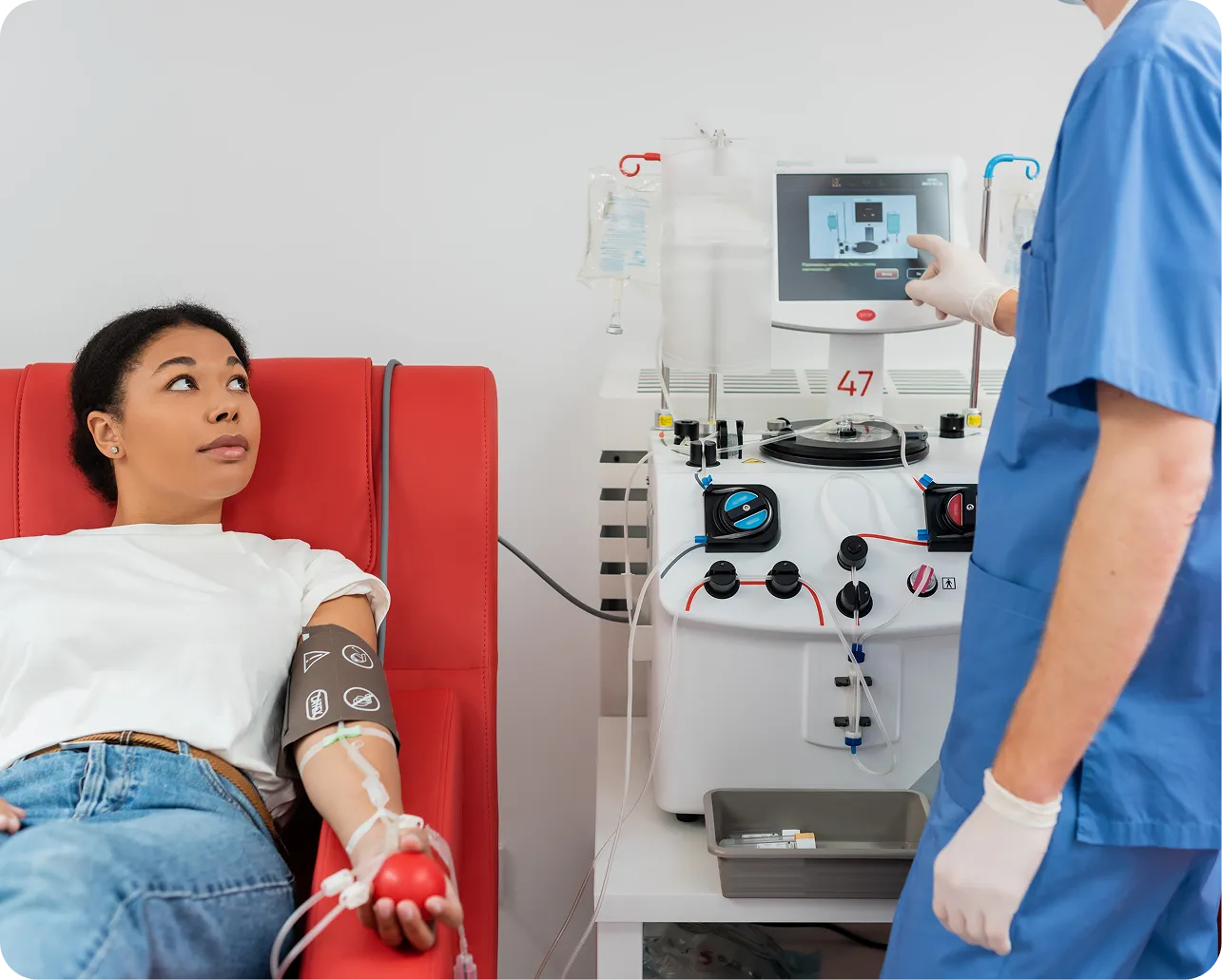
That makes DFPP different from conventional therapeutic plasma exchange, which removes a broader portion of plasma and generally replaces it with albumin, donor plasma, or another prescribed replacement fluid. The advantage of double filtration is selectivity; the trade-off is that what gets removed depends heavily on membrane characteristics and the clinical target.
How Double Filtration Works
The published DFPP literature describes preferential removal of higher-molecular-weight plasma constituents such as immunoglobulins, immune complexes, selected lipoproteins, and other large proteins while preserving more albumin than full plasma exchange. The exact removal profile is not universal: filter pore size, processed plasma volume, flow, hematocrit, and the molecule being targeted all affect what leaves the circulation.

Current U.S. Availability
The official INUSpheresis provider directory currently lists centers in countries including Germany, Austria, Switzerland, England, Spain, the UAE and Australia, but does not list a U.S. center. That is more precise than saying the technology is already a routine U.S. clinical option. AlyneMD is not currently offering INUSpheresis; patients should be wary of any website that blurs an overseas technology with a treatment that is actually available locally.
What the Evidence Actually Supports
Double-filtration plasmapheresis is not experimental as a general technique. Peer-reviewed literature describes its use in selected autoimmune, neurologic, renal, transplant, and lipid-related settings. A 2021 review summarizes established clinical applications, and newer studies continue to examine filtration performance and disease-specific outcomes.
The evidence becomes much less mature when DFPP is marketed broadly for biological aging, generalized inflammation, environmental-toxin removal, or nonspecific wellness. Small observational studies and mechanistic data can justify research interest, but they do not establish the same level of benefit as guideline-supported therapeutic apheresis indications. That distinction should be explicit in a physician-led practice.
Explore the full treatment page: Apheresis and blood-filtration overview at AlyneMD
Pair contour restoration with How EBOO therapy differs from plasma filtration
Related reading: Metabolic health optimization at AlyneMD
What Patients Should Be Cautious About
Apheresis is not a spa detox. It can alter immunoglobulins, fibrinogen, lipoproteins and other plasma proteins; vascular access and anticoagulation also introduce procedural risks. The appropriate question is not simply “what can this filter remove?” but whether removing those components has a demonstrated clinical benefit for the patient's condition, and whether the expected benefit outweighs the procedural risk.
Sources & Evidence
For patients who want to go deeper, these are useful starting points for understanding the technique, filtration performance, and current provider footprint.
Double-filtration plasmapheresis: review of current clinical applications2026 study of plasma separation efficiency using the INUSpheresis systemOfficial INUSpheresis provider directoryFrequently Asked Questions
Is INUSpheresis available at AlyneMD right now?
No. AlyneMD is not currently offering the INUSpheresis system. This article is educational and will be updated if U.S. access changes.
Is INUSpheresis the same as therapeutic plasma exchange?
No. Both are extracorporeal apheresis procedures, but INUSpheresis uses double filtration to fractionate plasma and selectively retain larger components. Therapeutic plasma exchange removes a broader portion of plasma and replaces it with prescribed replacement fluid.
Does INUSpheresis remove toxins?
Research has measured removal of selected environmental compounds and plasma constituents, but that does not establish a general clinical benefit for “detoxification.” The meaningful endpoint is whether removing a given target improves a defined medical outcome.
Is INUSpheresis proven for longevity?
Not to the standard we would use for an established longevity intervention. DFPP has a legitimate medical literature, but direct evidence that INUSpheresis slows aging or improves lifespan or healthspan remains limited.
Explore evidence-based blood-filtration options with a physician.
INUSpheresis itself is not currently offered at AlyneMD. Our team can review your clinical goals, available U.S. options, and whether an apheresis-based therapy is medically appropriate.