Professional Treatments for Pigmentation and Uneven Skin Tone

            Pigmentation & Uneven Tone can interfere with skin brightness and overall clarity. Our advanced aesthetic solutions are designed to correct discoloration, refine tone consistency, and support healthier-looking skin—helping restore a more balanced, radiant complexion.

Treatments for Pigmentation and Uneven Skin Tone

Care begins by identifying the trigger of discoloration. Through physician-led treatments, we refine tone irregularities, reduce contrast, and support skin health for results that appear even and natural.

Uneven tone may appear as spots, muted patches, or color variation that affects the skin’s uniformity. These changes are often linked to sun exposure, inflammation, hormonal shifts, or age-related pigment changes.

Science behind Pigmentation & Uneven SKIN Tone

Science of Pigmentation & Uneven Skin Tone

Pigment imbalance occurs when melanin activity increases, often triggered by sun exposure, hormones, genetics, or inflammation, leading to uneven tone and dark areas.

Types of Pigmentation

Epidermal:
Surface spots & sun damage.
Dermal:
Deep melasma patches.
Treatments for Pigmentation and Uneven Skin Tone

Treatment

Advanced treatments like lasers, peels, and microneedling fade dark spots and restore even skin tone.

Best Candidates

Best Candidates

These treatments are ideal for improving uneven pigmentation and discoloration. By targeting excess melanin, they help even tone, restore brightness, and support healthier skin over time with consistency.

Not every skin concern qualifies for our protocols.

Take the 3-minute assessment

Candidacy screening ensures the right treatment targets the right layer.

Treatments We Offer

Treatment Options

Dual treatment banner at AlyneMD

Dual MultiFrax

Dual MultiFrax Advanced laser improving skin texture and reducing acne scars.
LASEMD Ultra 1927 nm laser treatment at AlyneMD

Ultra 1927

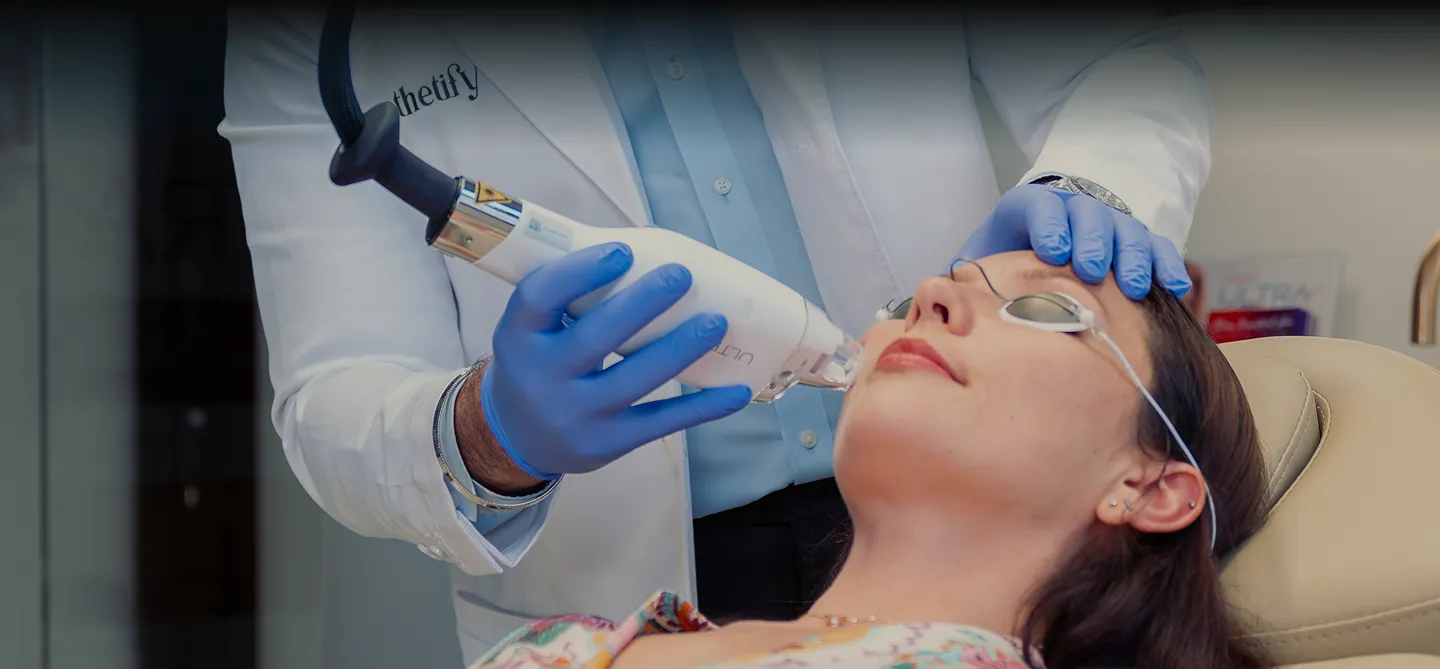
Laser treatment targeting pigmentation, uneven tone, and refining skin texture.
Q-switched laser treatment at AlyneMD

Q-Switched Laser

Q-Switched Laser Corrects pigmentation & evens out skin tone effectively.
Pico laser treatment at AlyneMD

Pico Laser

Pico Laser: Targets pigmentation, uneven tone, acne, and acne scars effectively.
Treatments We Offer

Treatment Options

Lasers & RF Microneedling

Lasers & RF microneedling boost collagen and smooth fine lines for youthful skin.

Plexr Plasma – Scar Revision

Plexr Plasma smooths stubborn scars with a gentle, non-surgical approach.

Fillers & Biostimulators

Restore and rejuvenate skin, smooth scars, and boost collagen for a natural, youthful look.

Fraxel Lasers

Fraxel Lasers target acne scars & uneven texture, stimulating collagen for smoother, rejuvenated skin.
Pigmentation & Uneven Tone

Benefits of Pigmentation & Uneven Tone Treatments

Clear Complexion

Fade dark spots and discoloration to reveal smooth, even-toned, radiant skin.

Radiant Skin

Enhance skin brightness and restore a fresh, healthy, naturally glowing appearance.

Long-Lasting Clarity

Prevent pigmentation from returning with advanced, targeted corrective skin treatments.

Pigmentation & Uneven Tone

Benefits of Pigmentation & Uneven Tone Treatments

Clear Complexion

Fade dark spots and discoloration to reveal smooth, even-toned, radiant skin.

Radiant Skin

Enhance skin brightness and restore a fresh, healthy, naturally glowing appearance.

Long-Lasting Clarity

Prevent pigmentation from returning with advanced, targeted corrective skin treatments.

Know What You Are Treating

Melasma, Sun Damage, and Post-Inflammatory Hyperpigmentation Are Not the Same

Melasma

Symmetrical brown or grey-brown patches, usually across the cheeks, forehead, and upper lip. Driven by hormones as much as by sun, which is why it often appears with pregnancy or oral contraceptives. Melasma sits deeper than most pigment and can worsen with aggressive heat, so treating it well means treating it conservatively. Anyone promising to clear melasma in one session is describing a different condition.

Sun Spots and Age Spots

Discrete brown spots with defined edges, on the face, chest, shoulders, and backs of the hands. These are accumulated ultraviolet damage, solar lentigines in clinical terms, and they sit near the surface. They are the most satisfying pigment to treat because they respond quickly and predictably to targeted laser.

Post-Inflammatory Hyperpigmentation

The brown marks left behind after acne, an injury, or an aggressive treatment. PIH is the skin overproducing pigment in response to inflammation. It fades on its own eventually, but slowly, and treating the underlying inflammation matters more than treating the mark. More common and more persistent in deeper skin tones.

Why the Distinction Matters

The same laser setting that clears a sun spot in one pass can aggravate melasma and can trigger new hyperpigmentation in deeper skin. Diagnosis comes before device selection here more than in almost any other treatment we perform. Dr. Sandhu assesses pigment type and depth before choosing a protocol.
See our laser platform
Timing

Why Fall and Winter Are the Treatment Window for Pigmentation

Treated Skin Cannot Take Sun

Pigment treatment works by targeting melanin, and freshly treated skin produces melanin readily. Sun exposure in the weeks afterward can undo the result or create new discoloration. That constraint is why summer is the wrong season to start and why fall through early spring is when pigment protocols actually hold.

Treating What Summer Left Behind

Most patients arrive in autumn with more pigment than they had in May. A series takes time, typically several sessions spaced weeks apart, with results building over months. Starting in fall means clear skin by spring rather than beginning the work when the sun returns. If you are considering pigment treatment this year, now is the point in the calendar when it makes sense.
Safety by Skin Type

Pigment Treatment for Deeper Skin Tones

The Risk Nobody Explains

In Fitzpatrick types four through six, the wrong laser or the wrong setting can cause the exact problem you came in to fix. Melanin absorbs laser energy, so treatment intended for a spot can heat surrounding skin and trigger post-inflammatory hyperpigmentation. This is why some patients are told their skin type cannot be treated. That is not accurate. It means it cannot be treated with the wrong device.

How We Approach It

Longer wavelengths such as 1064 nm Nd:YAG bypass surface melanin and reach the target more safely in deeper skin. Conservative settings, test spots, and spacing sessions further apart matter as much as device choice. Dr. Sandhu assesses Fitzpatrick type before selecting a protocol, and will tell you if pigment treatment is not appropriate for your skin rather than proceeding anyway.
Q-Switched for pigment

Why Choose AlyneMD

Physician AlyneMD
Physician-Led Care

Your treatments are designed and overseen by a medical doctor — ensuring accuracy, safety, and elegant, natural results.

Clinically Proven Technology

We use only evidence-based devices and injectables chosen for real outcomes, not trends.

Tailored Outcomes

Every plan is personalized to your anatomy and biology for refined, subtle, confident results.

Frequently Asked Questions

Frequently Asked Questions

HIGH VISUAL PERFORMANCE

What leads to pigmentation and uneven skin tone?

Pigmentation occurs when melanin forms unevenly in the skin. Sun
exposure, hormones, inflammation, genetics, or injury cause dark patches.

Is uneven tone the same as melasma?

 No. Uneven tone is a broad concern, while melasma is a specific pigment condition often influenced by hormones and sun exposure.

Which treatments are commonly used for pigmentation concerns?

Treatment options are selected based on pigment depth and may include energy-based devices, targeted exfoliation, or collagen-stimulating therapies.

How many sessions are typically required?

Most individuals need a series of sessions, depending on the severity and underlying cause of pigmentation.

Are these treatments safe for different skin tones?

Yes. Treatments are carefully chosen and adjusted to suit varying skin types and pigment sensitivities.

Can pigmentation return after treatment?

Pigmentation can recur if triggers such as sun exposure or hormonal changes are not managed properly.

When can results usually be noticed?

Visible improvement develops gradually, with clearer tone emerging over multiple weeks or sessions.