.svg)


KeraLase combines the 1927-nm Lutronic LaseMD Ultra with topical KeraFactor. The laser creates non-ablative microchannels in the scalp to increase topical delivery; it is a nonsurgical option for selected patients with thinning hair.
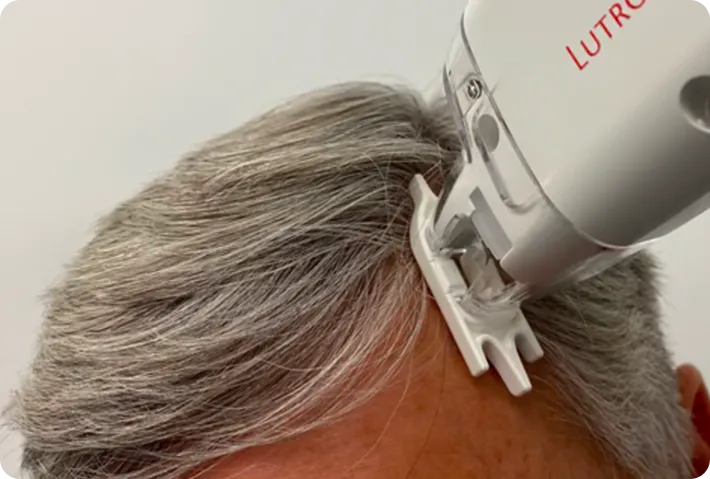
KeraLase is a laser-assisted topical-delivery protocol. LaseMD Ultra prepares the scalp with controlled 1927-nm microchannels, after which KeraFactor serum is applied. It does not transplant follicles and should not be presented as a substitute for diagnosis or surgical restoration when those are needed.
The goal is to support scalp and hair quality in appropriate patients. Results vary, treatment is generally performed as a series, and maintenance may be recommended based on the underlying hair-loss pattern and response.

How KeraLase Hair Restoration Works
LaseMD Ultra creates controlled microchannels in the scalp, then KeraFactor is applied topically. The laser and serum serve different roles: the laser prepares the delivery pathway; the topical formulation is the treatment applied afterward.

.webp)
KeraLase Treatment Series, Downtime & Results


.svg)
.svg)

Real Transformations



.webp)
.webp)
What to Expect With KeraLase
Pre-Treatment
Post-Treatment
How KeraLase Fits Into a Hair Restoration Plan
Diagnosis First
When Transplantation Is the Better Tool
Treatment Is Individualized
Frequently Asked Questions
KeraLase uses the 1927-nm LaseMD Ultra to create non-ablative microchannels in the scalp, followed by topical application of KeraFactor. The purpose of the laser step is to improve delivery of the topical formulation rather than to inject or transplant hair follicles.
KeraLase is generally performed as a series. KeraFactor patient guidance describes six treatments spaced about 4–6 weeks apart; AlyneMD may individualize timing based on diagnosis, scalp response, and the broader hair-restoration plan.
Minimal downtime is required. Most people return to work within 1–2 days.
Keralase improves hair and scalp health over time. While results are long-lasting, maintenance sessions may be needed to sustain optimal hair vitality.
KeraLase may be considered for selected men and women with thinning hair who still have viable follicles and want a nonsurgical approach. It is not appropriate for every cause of hair loss, which is why evaluation of the pattern and scalp comes first.
Temporary redness, mild swelling, or tingling may occur, but these typically resolve within 1–3 days. The treatment is non-invasive and safe when performed by a trained professional.
Most patients feel only mild warmth or tingling. A topical numbing cream is applied to ensure comfort during the session.

.svg)