.svg)


.svg)
Can You Get LaserTreatments in Summer? The Truth Most Clinics Won't Tell You
Every June, the same belief resurfaces: laser treatments have to wait until fall. So patients put their skin on hold for an entire season months of treatable concerns left untreated based on a rule they have absorbed but never had explained.
Here is what most clinics leave out. The risk was never the season. It is sun exposure and pigment, and both can be managed with the right treatment, timing, and physician guidance. The word "June" burns no one. What matters is what your skin has been doing in the weeks around your appointment.

Where the fear comes from and why it's incomplete
The concern is legitimate at its root. After some laser treatments, skin is temporarily more vulnerable to UV while it heals. And when skin is freshly tanned, it holds more active melanin so because some lasers target pigment, treating tanned skin raises the risk of burns or uneven pigmentation.
Those risks are real. But notice what they share: they are about pigment and sun behavior, not the month. Someone who works indoors and uses sunscreen daily is in a completely different position from someone who spent the weekend at the shore unprotected though both stand in the office in June. The honest answer to "can I get laser in summer?" is it depends on your skin and your plan exactly the judgment a physician exists to make.
Skin type changes the equation
Not all skin carries the same risk. Skin with more natural pigment needs more careful laser selection and settings, because energy that is safe on one complexion can cause pigment changes on another. Summer raises the stakes by shifting everyone's skin toward more active pigment. A responsible physician accounts for your skin type and recent sun exposure together rather than applying one calendar rule to every patient.
Three summer myths, corrected
First, that all lasers are unsafe in summer in reality "laser" spans many devices and settings, some entirely appropriate for warmer months. Second, that avoiding sun for a few days afterward is enough both your exposure in the weeks before and your protection after matter. Third, that sunscreen is optional if you stay out of direct sun incidental daily exposure (driving, walking, sitting near a window) is enough to compromise a healing result, which is why daily broad-spectrum protection is part of the treatment, not an afterthought.
.webp)
The physician-led way to do summer skin
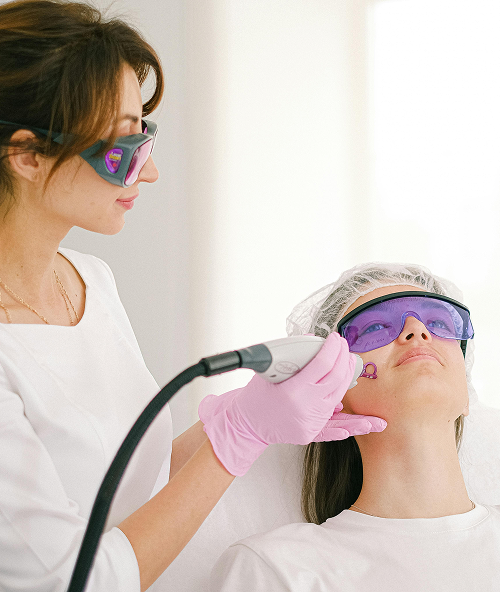
At AlyneMD, summer treatment is designed and led by Dr. Sandhu around your actual exposure and skin:
The right modality for the season and skin.
Timing around your life.
Aftercare that is non-negotiable
.webp)
What you can and shouldn't treat in summer
Many concerns can be addressed thoughtfully through warmer months with the right approach: certain skin-quality and tone treatments, specific resurfacing at appropriate settings, and a range of non-pigment-targeting work. Other, more aggressive treatments may be better scheduled for lower-sun months and a candid physician will tell you when that is the case for your goal. The point is that the decision should be made treatment by treatment, skin by skin, not by a sweeping rule that costs you a season.
The Hidden Cost of Waiting Until Fall
The pigmentation, redness, and texture that bother you in June do not pause until September. They sit there, treatable, all season. And the patients who arrive in fall having waited are often the same ones who spent the summer accumulating the very sun damage they could have begun addressing, under guidance, months earlier. Strategic now beats delayed later. The only question worth answering is what your skin can safely do this summer.
Frequently Asked Questions
Frequently Asked Questions
Summer Laser Treatment FAQs
Yes many laser treatments can be performed safely in summer with the right modality, careful timing around sun exposure, and disciplined aftercare. The real risk is sun exposure and tanned skin, not the season itself. A physician assessment determines what is safe for your skin.
Because after some laser treatments the skin is temporarily more sensitive to UV, and treating tanned skin raises the risk of pigmentation issues. These are manageable with proper modality selection, timing, and sun protection which is why physician guidance matters more than the calendar.
Broad-spectrum SPF 30+ daily, reapplied as directed, plus physical protection. Consistent protection is one of the most important factors in a safe result.
It can be, with careful laser selection and settings which is exactly why physician assessment of your individual skin, not a blanket rule, is essential.
Find Out What Your Skin Can Safely Do This Summer
Book a physician-led consultation at AlyneMD. Call (908) 888-9199 or request your appointment online.

.png)
.png)

.png)
.webp)

.webp)
.webp)






.svg)